





 RSS Feed (xml)
 OK, Ms. Invisible is the first to admit she can be a bit critical at times (but that's why you love me right?). I have made light of this young lady's talent with the flat iron a couple of times...she is definitely the master of 100 hairstyles.
But what Jazsmin Lewis is (besides an excellent hairstylist) is a thoughtful, down-to earth, ambitious, and focused Black woman, who definitely seems to have her head straight and in the right place. She is a lover of classic film, which I'm never one to be mad at, for sure. And, even more importantly, she seems to be the first female that I have interviewed (lol), but certainly not on purpose. So here is Miss Thing letting you know where she's coming from, the first lady of interviews on Black Cinema At Large:
Question 1
You seem to be everywhere lately; stage plays, television, and film. Which is your favorite medium and why?
I love all forms of acting. They all serve a different purpose to me and in my life. When I do a film, I get the chance to spend a month or two getting to know and grow a character. I get to take the time to develop the nuances of human characteristics. So, Film is a immersion into humanity and who doesn't love that. However I also love Television. TV shows your skill as an actor because many times you only have minutes to bring a character to life and deliver an interpretation of what you feel. It's fast and sometimes frenetic but always fun. And stage plays are the closet you can get to an audience and feel that energy with transforms every night into something new and many times beautiful. So, it would be hard for me to choose just one form of acting. I love them all.
Question 2
I have read that you've started a production company. What projects can our readers look forward to?
I started my production company the same year I started acting back in 1995. I knew I had to create projects in order to get to play the characters that I wanted to play. I have quite a few films in development now and have already produced other feature films. But keep looking out
in 2010 and you'll see Feline Entertainment in the forefront.
Question 3
There are many very pretty Black actresses in Hollywood not getting enough work, which doesn't seem to be a hindrance for women of other cultures. Do you think that being considered a Black woman that is beautiful can sometimes be a detriment in being taken seriously in Hollywood?
There's always someone willing and able to discriminate in Hollywood against women of color. Either your too beautiful or not beautiful enough. Beauty is subjective. I've been told that I was "too pretty" for some role that I really wanted but all it did was make me more determined to control my own destiny. I think being a woman of color can be a frightening thing for some
people in our industry. Our strength can be scary.. So, I don't allow anyone to use that excuse with me. It just makes me more driven. Question 4
What are your top 5 favorite films?
Wow, there are so many. But I love the old ones: "All about Eve", "Hush, Hush Sweet Charlotte", "Boomerang", "Lord of the rings" movies and "Mildred Pierce".
Question 5
A subject that comes up here quite often is the dissatisfaction with what "The Hollywood Machine" is producing in the way of Black Cinema. What, in your opinion, can the public at large do to change things? (Everyone gets asked this question, btw)
I think the public has to get involved with what they want to see. Write your Studios, stop paying money to see what you don't like just because Black people are in it if you don't believe in it, and support the actors making the films that you approve of. Don't wait till it comes out on DVD to support it. Show the numbers for the movies that you like. Question 6
I have a few readers who have emailed me about the TV show "Brothers". They feel that it is positive step in Black television. Will you be a regular on the series?
I was a guest star on the show and as far as I know, that's about it. Although I never close a door... But I have a series that I will be a series regular on starting in November and will release all the info to the press as soon as the ink gets dry on the contract. I have 4 films that I'll be
working on between now and March 2010 along with the series so I'll be busy. Best way to stay up on all that I'm doing in find me on Twitter/@Jazsminsworld. I give constant work and personal updates for films, tv and appearances.
Question 7
Any thoughts or advice you would like to leave for the readers?
Always follow your dreams. Even when it feels like nothing is happening, that just means work and believe harder. Keep God before you and let faith be the gasoline in your engine of life.
From IW: Co-sign!
big up to the folks on "grapes on a vine" a blog about indy Black film...check it
Wednesday, October 21, 2009
7 Questions With Actress Jazsmin Lewis....

Sunday, March 22, 2009
7 Questions With Black & Sexy Director Dennis Dortch...

One of my favorite things to do on this blog is to interview those I find interesting. The people interviewed here wholly deserve the attention and accolades they receive, as they are independent thinkers, free from the constraints of the conventional world. They learn from mistakes and experiences, and, most importantly, they are willing to share what they've learned with others. They are hustlers and sages, and I learn amazing life lessons and get inspired by each one of them; I hope you do too. Here is the latest--"A Good Day To Be Black and Sexy" director Dennis Dortch, a definite welcome addition to the halls of the new Black Renaissance in film...check it. Question #1
The landscape is so barren on Black love/sexual situations in movies. I know you have been asked this many times over, but what gave you the idea to make this film? Who or what has been your inspiration in filmmaking? (That is really two questions--I'm cheating a bit)
Life. Real life. Our daily pursuit for happiness in love and sex drives and affects most of our decisions in life. We are living it everyday. These are basic human needs that find our white counterparts with oogles of quirky movies on the subject. When it comes to us, suddenly it's different even though we are all human beings with the same desires and needs. When you do see us in any sexual situation in a movie (especially a mixed cast movie) - we are either raping, overly sexually charged, or getting no ass whatsoever. Nothing but the extremes and nothing in between. Keep in mind that anytime you put a black person on the screen (esp. a black man), whatever they are doing or portraying holds much more weight. Put a gun in their hand, show them dead, show them running from the law, in court, or playing the President of the US or God, or Jesus, or simply having sex, it's suddenly a little bit heavier. Where our white male counterpart is just doing something as an action, the black counterpart becomes that *something* they are doing.
I think the second part of that is black folks are kinda prudish. I mean the West is sort of prudish overall compared to our European counterparts, but we all love sex but we just don't want people to know we love it. That's why the porn industry is booming. It's all about secrecy, so it carries over to the big screen and the lack of content on the subject. I've been asked plenty of times, why would I want to make a film just about this stuff? Like a porno or something. This usually comes from a woman. Deep inside, I'm thinking this person is probably a freak in bed, but a lady in the streets. Simply, I wanted to just get at the things we are doing and feeling today and tomorrow, and the next day in a realistic presentation. To answer the second part of your question, it's almost the same answer... Life. Real life. Women are an inspiration especially. Sometimes I just want to talk to you. And film is an extravagant way to communicate. You ever had an argument with your significant other and you wish a third party was present so that they could validate your point of view or judge who is right or wrong in this situation? Cause you feel the other person is clearly not listening to reason. You just want someone fair and non-biased to call it. Making a film is like creating that opportunity for a third party assessment. I'm simply telling on someone, including myself.
Question #2
The visuals were wonderful in the film, and the performances from the actors are truly on point--very natural and affecting. What is your primary focus when you direct a film? What emotions and thoughts are you trying to elicit from the audience?
My primary focus is sensuality and naturalness. To capture those fleeting real moments in life that we all have experienced but never have captured on film. The actors are bringing a piece of themselves to the set. We discuss their own experiences related to the subject and pull from there. My cinematographer Brian Ali-Harding is by heart a documentary filmmaker. His style is pure cinéma vérité. We have been making films together since college focusing on real human emotion and moments not artificial movie moments and over-dramatic fake movie emotions. You put these two factors together and like peanut butter and chocolate, you got black and sexy.
My goal for the audience was to create some connectivity. If you watch the film and identified with something that's happening on the screen either by knowing this person in real life or applying a past experience you, yourself had, it feels real. You then feel connected. Question #3
The title of your film "A Good Day To Be Black And Sexy" was sure to stir up attention. Was the intention to make people take strong notice? Were you pressured to change the name by anyone?
Yes, I wanted the marketing of the film built in to the title and live on beyond it. It was always a brand to me. More than one film with many spin-offs and connected lifestyle products (clothing, music, etc.).
Yes and no to your second question. Someone very close to the film tried to convince me to change the stories to match what they perceived the title to mean.
Question #4
You made some unknown casting choices and filmed on a limited budget, and your film turned out to be one of the most interesting pieces I've seen for some time. As advice to some of the filmmakers who read this blog, how does one get a feel that they are moving in the right direction on a project? How does one garner support from those inside the film and outside of it?
The first question is what is the definition of the right direction? For me it is when something affects you or intrigues you. You have to be your own guinea pig and be affected before it can transfer to someone else. Trust yourself and your instincts and the people who are supposed to be attracted to your project will find it and support it. It's just energy and there is not trick in it. Just truth and honesty.
To go further, don't pay attention to the haters. There will be a lot of them. It's not that they mean you direct harm, but they have so much self doubt in themselves, and misery loves company. I was told that I was crazy to take the money out of my house to finance this feature. I was told that my script was a porno and no one would want to see this. I was told that no company would want to distribute a "black art film." Those types of films are reserved for white people. If you have a strong vision and it truly makes you excited just thinking about it, then there is a good chance that excitement will transfer to someone else watching the film that you made from that inspiration. Everybody may not like your film, but your job is not to please everyone. That is an elusive goal.(from iw--amen!) As far as gaining support, just do your thing. Most people just talk, very few actually do. It's not easy. It's takes a tremendous amount of focus, perseverance, and unwavering faith. Making a film and expecting a company to buy it and in turn people pay to watch it is not a solid business plan. It's crazy actually. So, when someone does it and breaks through, the law of attraction takes over and the support trickles in. It's still a struggle after you initially get that attention. Support is a fickle thing, trust me. It's really up to you to build on it in a timely manner.
Question #5
A subject that comes up here quite often is the dissatisfaction with what "The Hollywood Machine" is producing in the way of Black Cinema. What, in your opinion, can the public at large do to change things? (Everyone gets asked this question, btw)
If we collectively stop supporting the bullshit, the bullshit will disappear. It's about natural selection. Hollywood is not against making money any way they can. But really, you have to ask yourself, why would white people collectively give a damn about what we want as black folks? They are too busy trying to get what they want. Our wants and needs are our problem. And we dictate what gets put out there every time we spend money on it.
Question #6
Tell us what projects you are working on now. Anything we can look forward to in the future?
The big project launching next month is what we are calling Black & Sexy TV. An online portal for black content from my team. The first out the gate is a spin-off web series from the film called BLACK & SEXY B-SIDES. We are basically expanding on the world and characters created in the film in 2-6 minute episodes online. Plus we are creating the sequel to the film tentatively called A GOOD DAY TO BE BLACK & SEXY: NEW YORK CITY. Outside of Black & Sexy, I have a feature I'm currently writing that I'm real quiet on, but I'm real excited about. That's why I'm not saying anything really. You gotta stuff all that excitement and desired to blurt out the story into the script.
Question #7
Any thoughts or advice you would like to leave for the readers?
I guess this would go to the filmmakers...Distribution. Most filmmakers (including myself) look at obtaining distribution as the end-all and be-all goal. But that's really just the beginning. And we spend a lot of time stressing on the things that don't even matter in the end, when the real important things have slipped past us a long time ago. The great thing about making your own film from your own money is you have all the control. Suddenly when you get distribution, you see most of that control taken away. The biggest beef a filmmaker will have is how his/her film is marketed. And really it's just a divide between your goals and your distributor's goals. If you can identify what their true goal is, then you can better manage your expectations if you decide to sign with them. And you need to figure out what it is you want and how that fits in the current climate of the film industry. I stumbled upon a quote in a magazine on an airplane trip one day that said it all: "You don't get what you deserve, you get what you negotiate."
From IW: "You don't get what you deserve, you get what you negotiate." Truer words were never spoken, for reals! A phrase to live by folkses, and completely consider the source. Below is the new trailer for "A Good Day To Be Black and Sexy"--please add to your Netflix cue or get out to your nearest video store and support our new Renaissance....
Monday, December 29, 2008
7 Questions With Director Pete Chatmon....
 Quite by accident I happened upon a movie called "Premium" while channel surfing on cable. It was described as a film in the vein of "Hollywood Shuffle". I didn't really get that, the only thing that seemed to be a commonality was that the central character was a struggling Black actor going through numerous shenanigans. What it was however, was a well made, well directed, well written, and well acted surprise of a film.
It made me investigate further, and I found out that a dude named Pete Chatmon wrote, directed, and produced it. I posted about it and called him "kind of a hottie" (which he called me out on). The truth is, he is very much a hottie. Not just because of looks, but he has the talent, drive, and ambition that makes me exhausted just reading about his activities. He is a true case study on what to do to make it, not just in film, but in life. The fact that he is an obvious cocktail lover with amazing sartorial sensibility and a true New-York-style "keeping it real" swagger is just the icing on a very delicious 7-layer cake for me. Check out his views on things; this man is gonna be huge--East Coast stand up!
Pete Chatmon: Nota Bene-I am sipping on my 4th glass of the good stuff as I type this so the levels of "real talk" are likely to be quite high. My apologies should it be "too" real. Actually, I'm not apologizing. Read on people!
Question #1
Your film "Premium" was an impressive outing; a fresh take on Black male/female relationships. I know you've been asked this ad nauseum, but how did you manage to snag such a quality cast for your first feature film?
I had to look up ad nauseum right quick to make sure I was on the right track! -- Getting cast is all about the script. Especially when there is no money or the salary doesn't drastically change the actor's lifestyle. With PREMIUM I felt that I had written something that would be unique (although "normal" experiences for black characters shouldn't be) and would entice actors interested in supporting the voice of an emerging filmmaker + the opportunity to put a spotlight on the realities of the experience that they live day in and day out. It's the same thing I've done on my non-profit or documentary work -- people get on board for a project about education or AIDS because it's the right thing to do.
Along the same lines, there are "commercial" projects, or endeavors, that strike the same chord for the right people. We all play a specific part in the machine of making art, and I've always moved with the assumption that since I'm not crazy (right?) there are folks out there who share similar sentiments and viewpoints but with different talents. The talents that will help me realize my ideas. So...I write, produce and direct this film knowing that there is an actor waiting for someone to present him or her with this opportunity to flex. It's symbiotic. The final piece is having a great casting director like Sig de Miguel who can work his magic to ensure that actors, their agents, and managers, are aware of the viability of your project.
Question #2
Your film "761st" has a barely touched subject matter (Black WWII war heroes), and details the war experience in great depth with those who were actually there. What gave you the idea to make such a film? How did you bring it to fruition?
761st was born under the decision made by my Executive Producer, Steve White. There was a September 2002 NY Times article about the 761st Tank Battalion and the fact that they had 48 straight annual reunions up until that point and were facing the possibility of having to discontinue the event due to lack of money. A battalion that once numbered over 700 men had been reduced, thanks to the unavoidable passage of time, to just 31 members.
The "barely touched" portion of your question flows directly into why they met every year. Imagine telling your grandchildren, or other people you come across in your life, that you fought in the Battle of the Bulge. That you have the 2nd longest military active duty (183 straight days and no relief) in American history. Imagine that people look at you crazy because the things you are saying are not reflected in the history books, the movies of the time, or just general public knowledge. You would surely get tired (if not pissed off) of saying "I really did that" and trying to convince people of something that should be American common knowledge, let alone "Black". Meeting with your comrades once a year they didn't have to say or prove anything because they all..just...KNEW. Lived it. They were all there and that shared experience provided comfort, relief, and affirmation of one of their major life contributions.
I met Steve 2 years into that process as I was raising money for PREMIUM. He supported me in that project and right after I locked picture we met in a coffee shop and he presented me with the story of the 761st. I looked at all of the tapes over the weekend and said "let's make this happen". I came up with a battalion of my own, 2 producers (Christina DeHaven and Emily Konopinski) and an editor (Adam Hark) and we proceeded to handle the jobs of probably 20 people. I mapped out a storyline, including new interviews, visual approach, and the writing of the narration, that would cement an understanding of their accomplishments for the viewer but in the later portion of the film take America to task for not honoring what they had done. The military is an honor system, where it you do "a,b,c", you become a Colonel. When you do "x, y, z" you become a general, etc etc. It's a merit system and the only reason they were not acknowledged for their exploits was racism. Not a single Black soldier received a congressional medal of honor for what they did in WWII until January of 1997 and only 9 men received it at that time. One was Ruben Rivers, of the 761st. Posthumously.
Question #3
Being an East Coast auteur, do you find it harder to make/keep contacts? Is there a support system for Black filmmakers in New York? I know that some Black filmmakers have stated to me that they believe it is more advantageous to stay in the non-Black film circles of LA.
It's all about your network, and then your location. Clearly, Des Moines isn't the place to get your film career popping (in most cases), but as far as other metropolitan centers, and NY vs. LA specifically, if your support group is in NY, then you stay there. Point blank. I couldn't do 90% of what I do any other place in the world. The money we raised for PREMIUM would never have been raised. We put together a Doritos commercial for their Crash the Superbowl competition for about $300 in just a few days.
That's relationships at work. If I were sitting in my LA apartment, motivated to do any of the above or the other projects we've put together, it would never have happened because I didn't have the ability to bring people together who were both talented, competent, and trustworthy in the sense of shared vision and mutual goals. I can do that in NY/NJ because we have a strong, deep rooted team that often surprises me with their willingness to join forces for no money in the interest of art. That said, if and when it's time to go to Hollywood, I'll go...my momma ain't raise no fool...but overwhelmingly the ideas that I generate and create as a writer tend to take place in NY anyway. And whatever money is to be made through the system through ideas that will make them money is to be used to facilitate more stories like PREMIUM and the 761st. Question #4
You went to a very well respected film school (Tisch at NYU). There are a lot of aspiring filmmakers who read this blog. Do you feel that film school is an imperative necessity for a Black filmmaker? Or do you feel as if talent and contacts can be enough as essential tools?
It's not about film school. It's not about talent. It's not about contacts. I have friends who's parents, in my eyes, are like kings and queens and titans of business. But the children don't necessarily achieve on the same level. Now, they may "fail upward", but the dedicated pursuit of a life's goal is not there despite the available contacts. I always say that I am far from the most talented filmmaker, yet there are people I graduated from NYU with who were more talented and still haven't made a feature film. Some may not even be on a directing track anymore.
Personally, I know that I will not allow myself to be out-hustled (from IW-i noticed!), and that doesn't just mean being up late and thinking. That doesn't impress anyone because one you hit 15 years old, staying up late ain't even hard anymore. It's about WHAT you are thinking about when you're up late. Out maneuvering the competition. Pushing yourself creatively.
Question #5
A subject that comes up here quite often is the dissatisfaction with what "The Hollywood Machine" is producing in the way of Black Cinema. What, in your opinion, can the public at large do to change things? (Everyone gets asked this question, btw)
I'm a realist. You can't blame the public. Well, you can, but then you are just continuing to make shit on the sidelines (if at all) and complaining about why "people aren't feeling me". You're the mad rapper at that point. I'm not saying you HAVE to play within the system, but don't be mad when people aren't flocking to your product. I stand behind PREMIUM with my head up and defiant eyes, happy that everyone involved with the film was able to do it. We made something that I wrote in my momma's house and got it in a few theaters and on cable and I directed actors that I watched on TV in the very same room where I wrote the script.
But I also know that the film is a break from certain expectations and the minute you do that you are going to lose a certain amount of people AND fail to reach a certain amount of people because it won't be marketed to them on the true merits that might appeal to their sensibilities. So what do you do? In a perfect world, that film would have been my "She's Gotta Have It", opening the door to industry opportunities where the suits wanted my voice to give a little flavor to their content. But since it didn't go down like that, you can keep trying to raise millions of dollars on your own (which is no joke!) or you can find a way to write something that appeals to their bottom line while never losing your integrity.
Question #6
What projects are you working on now? What can look forward to in the future?
2009 is gonna be crazy! We have a heist film and romantic comedy in development, a 1 hour cable drama we are presenting to networks, and our team of talented filmmakers are doing the hottest music videos, commercials, and viral content you can find. I'm proud to work with these guys -- Anthony Artis, Mike Brown, Benjamin Ahr Harrison, and Dennis Liu. We've also expanded and launched Double 7 Boutique with our Resident Creative Director, Candice Sanchez McFarlane, to customize marketing campaigns for a wide variety of clients. People spend their budgets in the traditional arenas, but more and more they are leaving a few dollars for more creative media channels and platforms. Double 7 Boutique takes those few dollars and make 'em look like millions of dollars to increase market awareness and penetration for a brand.I would say keep up with Double 7 and join our communities (listed below) because while we are doing all of this, and keeping people engaged in the process, it is also our mission to provide information and motivation to other filmmakers to achieve their goals. When we have 10 "Pete Chatmon's" then the audience is no longer to blame. They'll have no choice but to see our content.
Question #7
Are you married? Just kidding! Any thoughts or advice you would like to leave for the readers?
I will end it with one of my favorite quotes:
"All men dream: but not equally. Those who dream by night in the dusty recesses of their minds wake in the day to find that it was vanity: but the dreamers of the day are dangerous men, for they may act their dream with open eyes, to make it possible."

- T.E. Lawrence (1888 - 1935), The Seven Pillars of Wisdom
AKA Lawrence of Arabia
 Thanks for the opportunity to talk to your audience. And I can't leave without a few plugs! Peep the links and join what suits you below:
http://www.double7world.com/ -- Our global community site
From IW: Got that? Here are a few more links for this very busy man and his projects:
FUNDRAISING PART I http://www.youtube.com/watch?v=tewQhzZZdrM&eurl=http://www.youtube.com/user/Double7Film
FUNDRAISING PART II http://www.youtube.com/watch?v=nGD9fLwq4Zw&eurl=http://www.youtube.com/user/Double7Film
FORBES.COM PREMIUM INTERVIEW http://video.forbes.com/fvn/forbesonfilm/bp_fof113006_ab
ADDITIONAL RADIO + VIDEO INTERVIEWS (NBC, Blogtalk Radio, etc)http://double7film.com/?press&interviews
ARTICLES + FILM REVIEWS http://double7film.com/index.php?press&articles
<
Wednesday, November 19, 2008
7 Questions With Screenwriter Barry Michael Cooper....
 "About five years ago, I accepted the fact that I had fallen off.
Let me be clear: I knew I fell off in 1998, when I couldn't sell a script, couldn't get a call-back from a studio, producer or a manager, and my agency--William Morris--decided to drop me, all because I slapped a call girl in the lobby of the Sofitel on Beverly Boulevard, a call girl who I had a relationship with and promised to blow up like MJB.
Oh, of course I was married and had two young children while I was why?-lin' out in Hollywon't. Don't let me forget that."
That is the opening of the cautionary confession that Barry Michael Cooper, aka BMC, wrote in an article that you can read HERE. His journey has been one of success, trial and tribulation, lessons learned, and triumph. After penning such community favorites as "New Jack City", "Above The Rim", and "Sugar Hill", he enjoyed fame followed by infamy, then a crushing career flatline...only to rise like a phoenix out of the ashes.
His honesty is beautiful, and a morality tale that one should never take anything for granted. I am honored that he took the time to participate on my post of "7 Questions":
Question #1
The films that you wrote were staples of the nineties. It is pretty well documented how you came up with the idea for "New Jack City", but how did you come up with the screenplay for "Sugar Hill"?
Sugar Hill came about after I had seen a Cassavetes retrospective in the East Village in the summer of 1991. I actually watched the film "Faces" maybe 3 times in one day: I was blown away by the freedom of the narrative and the acting, and the neo-realism of the cinematography. I began to research and study John Cassavetes, who I remembered from the film "The Dirty Dozen", which also starred Lee Marvin, and Jim Brown. I also read that Cassavetes was also influenced by Black filmmaker William Greaves, and all of the groundbreaking documentaries and films like "Symbiopsychotaxiplasm", that he had done.
It was at that point I wanted to write a piece that was urban but still kind of a existential character study of a street dude who wanted more than the dead end life he had chosen for himself. I also watched the George Cukor version of "A Star Is Born" which starred James Mason and Judy Garland. So a myriad of narratives were tracking in my head. The first draft of "Sugar Hill" was a script I wrote in 1991 called "Skeezer", and it was from the p.o.v. of this party girl who was a struggling actress by day and a phone sex operator at night, who meets this drug dealer and they fall in love in the midst of two lives that were burning from the flames of bad choices. And the title "Skeezer" did not refer to this woman, Melissa: it described the guys she was meeting at the Chelsea bar/club called Nells. Actors, ballplayers, boxers, ghetto celebs, who weren't just sexual whores, but life-whores: the debauched. Dudes whose mindset was, "I want the world and everything in it, and I will do anything to get everything." These dudes were the real "skeezers".
But Beacon-Fox thought that subject matter was a little bit much, and the title as well, so needless to say, the movie went through a few changes. But it is my favorite film, hands down.
Question #2
Tupac made only a few films, each one showing his immense potential as an actor. What was your experience like on the set with him on "Above The Rim"?
I wasn't on the set of "Above The Rim", and the day I was supposed to meet Pac, I was editing a music video for the singer Jeff Redd, in Soho. By the time I arrived to the Rucker Basketball court on 155th Street and 8th Avenue, Tupac had gone. I think that guy is an acting legend. So tragic that he is not with us anymore. GOD Rest his soul.
You seemed to have worked through the betrayal on your career in Hollywood, but many other shining and revered black auteurs in the same period in the nineties seemed to have faded away as well; Matty Rich, and The Hughes Brothers, just to name two. What is your take on that supposed Black film renaissance and resurgence just disappearing into thin air?
The Cinematic Black Renaissance of the 90s is a unique epoch: we may see a resurgence of Black film in the age of President Barack Obama, but not like what we experienced two decades ago. Check it: nineteen films between 1989 and 1992-3, that had either Black producers, directors, and screenwriters? Nah. I think it was a phenomenon that kind of dovetailed with what the great author and cultural critic Nelson George wrote about in his book Post Soul Nation: we found our voice and our gravity as Black people in the oppressive and dismissive years of the Reagan era.
It was Jesse Jackson, it was Michael Jackson, it was Michael Jordan, it was Prince, it was Al Sharpton, it was Spike Lee, it was Barry Michael Cooper, Greg Tate, and Nelson George at the Village Voice. It was David Dinkins as mayor of New York. Reagan and the Reagan era had an intense disdain for Black folk, and Black folk responded by rising to the challenge and excelling in all endeavors, and that sense of pride and work ethic transposed itself to the world of film, too. However, I think we became complacent during the Clinton era. I believe rap and Hip Hop found a darker but profound voice during the Clinton era, but in film, we had a foolish sense of entitlement. And a lot of us--and I am speaking for myself--we lost our way. We thought the gates at Sony, Warners, Fox, etc., would stay open forever. But Hollywood not only eats its' young, Hollywood eats anything that's green. And when it's not green its not part of their menu anymore. So I believe a confluence of those factors led to a lot of folk losing their way.
Do you think there is a double standard in Hollywood with bad behavior? Non-black Hollywood's DUI's, car crashes, drug addictions, and other even more questionable behavior seem to be overlooked--indeed sometimes even garnering more support for the persons involved. Hollywood and it's ilk usually seem to rally around those that have deep personal issues. Do you feel that Black Hollywood doesn't offer the same support systems? Is that why you weren't able to even work with your own community?
I don't think the double standard has anything to do with race: it lends itself to who makes the most money for the studios or networks. If you are a cash cow, you can almost kill with impunity, and get away with it. That's what fixers are all about, the highly-paid "sin eaters". If you are making money, you are valuable. It not, you become expendable. It has nothing to do with race. Look at the gossip blogs, look at the blind items, and if they are to be believed, then a lot of our popular icons in the Black community are living more off the hook than Caligula, lol. But as long as they make money for the studios and networks, their negative behavior will not only be protected, but encouraged. Once the dollar dries up though, their mugshots will be online, along with the tearful confessions on YouTube and Access Hollywood. You know the routine...
Question #5
A subject that comes up here quite often is the dissatisfaction with what "The Hollywood Machine" is producing in the way of Black Cinema. What, in your opinion, can the public at large do to change things? (Everyone gets asked this question, btw)
The public can support idiosyncratic Black film, be it online, on cable, at the local art house cinema, or just buying the Dvd online at Amazon or Barnes and Noble. We can support these kind of films. Because at the end of the day, that ka-ching is the lever in the voting booth of Hollywood. We vote with our dollars and Hollywood needs that vote!
Question #6
What projects are you working on now? Anything we can look forward to in the future?
I have transitioned into television: TV is really hot right now, and a gold rush for filmmakers, especially cable. Like the real estate mantra, "Location, location, location", in TV it's "Content, content, content". I produced the Season Three premiere of BET's crime doc series "American Gangster". The episode focused on the 80s Bronx gunman Larry Davis, and that particular episode was the biggest Original Series premiere in BET history, with 2 million viewers thus far. The episode aired 23 October 2008, but you can see the episode and the other episodes American Gangster on iTunes. Please order it! (lol) I also have an indie movie playing on the web titled "Blood On The Wall$" which can be viewed at www.citypaper.com/go/botw
I am also blogging for Huffington Post: http://www.huffingtonpost.com/barry-michael-cooper I am also doing a few more films and TV shows that will premiere online. When they are about to happen, IW, I will give you the scoop before anyone else.
Any thoughts or advice you would like to leave for the readers? We have filmmakers as well as film lovers on this blog regularly.
My advice to other filmmakers out there is never, ever give up. With the advent of online cinema, the playing field is wide open. Do your own films, and premiere them online. If you post it, they will come, to paraphrase the catchphrase from "Field Of Dreams". And know that Providence will make a way out of no way. Even if you don't believe in GOD, believe in the Essence of this life that's bigger than you. Because cinema is about the belief of the unbelievable. So keep grinding, and don't give up.
From IW: Veeeery interesting. A testament that one should never give up, and keep it moving and keep it positive no matter what....loves it. Look for him on The Huffington Post HERE. Be blessed BMC!

Monday, November 17, 2008
Questions....

Who knew Condi Rice could look like this? Not me, that for sure.
Speaking of looks, is this really shit talking blogger Sandra Rose? Suddenly her extreme and obsessive hatorade on Beyonce and Ciara makes complete and total sense.
Is this her too?
Why am I absolutely not feeling Daniel Craig as James Bond? At all. He looks positively simian, with zero sex appeal (to me anyway). They broke the mold after Sean Connery, who had the swagger of fifty 007's. Bring on Clive Owen!
Was anyone surprised that Wanda Sykes came out as a lesbian? Not I.
Did you know Timbaland was producing movies? From The Hollywood Reporter:
Timbaland’s Mosley Media Group is teaming with Effie T. Brown’s Duly Noted Inc. to produce the film, which follows five young women facing life-altering decisions about their relationships with members of a rock band.
Writer-director Richard Zelniker’s film is set to begin shooting in the spring, with Brown, Marcus Spence and Timbaland’s wife, Monique Idlett-Mosley producing.
The Mosleys plans to promote the film with behind-the-scenes content designed for mobile devices.
From IW: Timb's projects have all been non-Black for the past couple of years; by the sound of this project, he is probably continuing that trend.
Housekeeping stuff: you may notice some tired Google ads on my site lately--I am working on a project with a company called Yield Build in the Bay, don't be alarmed! :-)


Tuesday, October 14, 2008
7 Questions With Director Barry Jenkins....

Question #1
Your film, "Medicine For Melancholy" is a cool, clean drink of water for those of us dying of thirst for something different in Black Cinema. What has been the response from your Black viewers? Is there a difference in the responses from your non-Black audience?
First of all, thank you for that. I'm from the South, so believe me I know how good a cool, clean drink of water can feel on a hot afternoon! This film has only played at film festivals, which…to me a film festival viewer is different than an average viewer at the multiplex. I feel at film festivals the audience is truly there to support the filmmaker, they go into a screening hoping, wanting to love the film. So in that respect, I have to say across the board the response to the film has been overwhelmingly positive, regardless of race, class, gender, etc.
That said, the response from folks of color, particular black folks, has been undoubtedly passionate. By passionate I mean I've signed the back of ticket stubs, posed for photos, given long, warm hugs, signed program booklets; I've been messaged on MySpace and Facebook these sincere thoughts about the film and how it's made people feel. And I am not exaggerating at all when I say that ninety-five percent of those incidents have come from black folks.
Question #2
I think there are many different types of filmmakers, but there are two types in particular I reference when it comes to this question:
1) Those who have a definitive point of view and create a film to present that point of view.
And…
2) Those who have a question and create a film to investigate that question.
To me, this film and myself fall decidedly in the second group, which is a way of saying there was no particular message I was trying to put across in making the film. The two characters represent two different sides of a discussion, and I tried to be very careful to not give more weight to one or the other. The questions that arise during the film are addressed but not answered. As a chronicling of 24 hours in the lives of two people, you can only resolve those issue so far in this film.

The film was funded first and foremost at the screenplay stage. When writing the script, I made sure to set it in places that I knew we'd have access to, that would require minimal lighting and simple set pieces. It was monetarily funded by my friend Justin Barber, paid for entirely by the money he earns doing special effects/animation work on DVDs. Basically, the Ocean's 13 DVD special features menu paid for Medicine For Melancholy. Justin owns this movie outright...or rather he used to own it before we sold to IFC.
This movie was shot with a four-person crew on an obsolete camera (Panasonic HVX) and edited on a laptop. The means to make films is out there for anyone with enough friends and skill to utilize them. The biggest challenge was and always will be deciding to "just do it." It seems cheesy to say it, but the truth of that statement is why Nike's slogan has stood the test of time.
 Question #4
I'm so glad you asked this question. Due to the success of this film, I've been spending more time in Hollywood and what I've found has been pleasantly surprising. All over town, there are young folks of color making their way up the ranks, holding executive positions at many of the major studios and production companies. I lived in LA five years ago and this was not the case. As these folks work their way up through the ranks, I think you'll begin to see more interesting work by and about people of color coming out of Hollywood. It's an amazing thing that's happening from the inside out, which to me is the final piece of the puzzle that's always been missing.
Just last week, I watched the 2nd debate between Obama and McCain in an apartment in LA filled with young execs of color (and some absent that color!) from all different aspects of the Hollywood game. If what I saw that night was any example, the future is bright.
Question #5
This one is simple: One ticket, one vote. Every time you go to the multiplex, the powers that be take note. In fact, the Hollywood machine is completely driven by box office. When a movie like Talk To Me or Miracle At St. Anna tanks, many, MANY people take note. And to be honest, this is no different than when a movie like The Wackness or The Door In The Floor tanks. To them, it's all dollars and cents. If World War II movies about folks of color made money, Hollywood would have no problem pumping them out; it's all about the bottom line. Tyler Perry (and this not in anyway a critique of those films) is a perfect example. Dollars and cents.
I always go back to the Rosewood/Booty Call example. They came out on back-to-back weekends. A whole lot of people went to see one. Not very many the other. Hollywood took note.

I'm working on a few different things, all of which are nothing like Medicine and hopefully involve us getting paid to exercise our craft. I've done nothing but SPEND money to make Medicine For Melancholy. If folks want to know what it takes to realize an indie film, that's it in a nutshell. I have nothing but debt to show for this film. And a whole hell of a lot of PRIDE.
For the record, I definitely come out on top in that deal.
Question #7
Yeah, MUCH THANKS for reading this. And by this I don't mean this interview, but rather this blog. Much thanks for taking the time to get on the net and find resources like this blog, The Obenson Report, Hammer to Nail, Indiewire, all these resources that help plug us all into the same cycle. Medicine For Melancholy would not have had the success it's had were it not for people blogging about it, doing the work of pointing it out to readers. It's a cycle that keeps on giving. I made the point of "one ticket, one vote" above. Building awareness of smaller films like ours via the web is no different.
I'm very grateful to have your eyes on that computer screen right now, so...
…much, MUCH THANKS.
From IW: No, thank you. Loves it! I expect great things from this brother. If you'd like to more about his film, Medicine For Melancholy, check the link http://www.medicineformelancholy.com/. It will be on the IFC Channel soon....until then, here is a clip:
And here is a clip of Barry giving a short chat about the movie:
Tuesday, August 12, 2008
7 Random Movie Questions.....


*the whole tropic thunder/blackface thing by the way, i really don't care about at all
Wednesday, March 26, 2008
7 Questions....
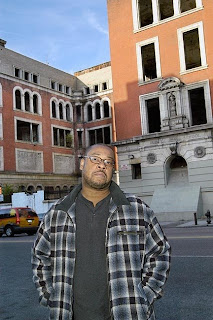
MG: Films have always been a big part of my life as well as a part of my creative process. If I'm stuck while writing an article, short story or my novel, I'll put in a movie to get the juices flowing. Being a native New Yorker, directors Spike Lee, Woody Allen and Martin Scorsese are my cinematic holy trinity. Still, I am a fan of many genres and styles. This might be cheating, but if I had to write to the world about TWO films they would be Annie Hall and Mo' Better Blues--both New York stories that document the ups and down of being an artist in this crazy city of mine.
Question #2 (kind of a 2 in 1)
MG: I read this cool book last year by Martha Southgate called "Third Girl From the Left" about three generations of women and their relation to movies; I'd love to see that. I would love if some cutting edge animator created a feature film based on the Parliament-Funkadelic album covers of Pedro Bell and Overton Lloyd. As much as I like the urban camp of Beat Street and Krush Groove, I'd love to see a film about hip-hop that was as powerful as Citizen Kane.
My good friend Barry Michael Cooper, who wrote New Jack City and Sugar Hill (see this: http://stopsmilingonline.com/story_detail.php?id=791) [and I] often have these discussions about where we want black film to go. Both of us are influenced by David Lynch, but don't bet on Hollywood ever investing in a Black director with that kind of bizarro vision.
Barry has been experimenting with film and different technologies, but I could only imagine what he could do with a few million dollers. I just wish Black filmmakers like AJ Fielder (who shot Daughters of the Dust and Crooklyn) and Malik Sayeed (director of photography on Clockers and Girl 6) were allowed to tell their stories too.
I had this crazy idea for a script about my family, but I'm sure if it was ever made it would be more like Martin Lawrence than Wes Anderson.
Question #3
MG: My problem with some younger culture writers is that they limit themselves by not reading more, seeing different kinds of films or opening themselves up to different experiences. If you want to write about hip-hop and R&B, that's cool, but you should read up on jazz, old school soul, punk, etc. I'm not saying you should be an expert, but as a music writer you should know the difference between Monk, Miles and The Clash.
The cultural critics I admired when I was starting out, most noticeably Carol Cooper, Greg Tate, Nelson George, Barry Michael Cooper, Bell Hooks, Michele Wallace and Frank Owen all knew a little bit about a lot of things: old novels, films, paintings, poetry, art galleries and museums, playwrights and small theater, comic books, rock music, etc. It's all good to specialize, but don't be afraid to enrich your mind with something new. It can only make one a better writer.
Question #4
Question #5
Question #6
 The illustration for the "The Whores of Onyx City" story/art by Sean Wanghttp://www.seanwang.com/
Ms. Steele is based in part on my fascination with blaxploitation queens Pam Grier, Tamara Dobson and Judy Pace; my personal soundtrack while writing the story was Cree Summer (Street Faerie), Erykah Badu, Jill Scott, Martina Topley-Bird, Stephanie McKay ("Tell Like It Is"), J-Dilla, DJ Shadow and Portishead. Needless to say, the story is funky and strange.
Darker Mask also features powerful stories from Walter Mosley, L.A. Banks, Ann Nocenti Gar Anthony Haywood and Jerry Rodriguez.

www.amazon.com/Darker-Mask-Gary-Phillips/dp/0765318504
MG: My only thought is directed at those who want to writers. Me and my friend (and sometimes editor) Miles Marshall Lewis, like to proclaim, "Writers write." Which means, if you have a good idea you should write it instead of talking it. I know a lot of writers who talk a good game, but rarely produce. Of course we all need to pay bills, but don't wait for somebody to give you loot before you write screenplay, novel, short story or whatever...simply strive to be the best.
Friday, February 15, 2008
7 Questions...

Filmmaker! That's what I went to school for and that's what I'd really like to be doing right now - making films. But circumstances led me down different paths. However, I'd like to think that there's a beneficial symbiotic relationship between everything that I do. How do I keep my balance? I can't :o) That's why I'm letting go of a few things, or at least reducing the amount of time spent on specific ventures and redirecting those valuable yet limited minutes to my preference - filmmaking. Something(s) had to give eventually.
Question #2
Money! Cash! Loot! Bank! The green stuff :o) The same old song and dance that just about every indie filmmaker has experienced, and still continues to experience. The film I ended up with isn't the film I started production with. Much of the script had to be essentially discarded due to money and time contraints, and I instead employed copious amounts of improvisation from the actors, which actually ended up working in my favor. The final product displays a certain realism that helped win audiences over. So, one could argue that there's actually some benefit to working with little to no money. It prevents you from getting lazy, and forces even more creativity out of you. But with a little more money, the production certainly wouldn't have been as challenging as it ended up being.
Me, myself and I. It was made for a paltry $5,000, a fraction of a percentage of the average studio-produced picture. Everyone worked for free, and digital video was my weapon of choice. I got all my equipment for free (both production and post-production tools) significantly reducing my costs. Renting cameras, lights, sound equipment, and an editing suite would have been quite a burden on my bank account, so I utilized the few connections I had to ensure that I didn't have to pay for much. My most consuming cost was food for the cast and crew. I did everything I could to keep my costs low. I used my apartment for most interior scenes, often doubling as a second apartment and also as an office. The script wasn't inundated with dialogue which can add significantly to overall cost... etc. So, for those wanting to go the same route, perform an inventory of your physical assets, as well as those of others you have access to for little to no money, and write a script around your findings. Keep your story simple, but interesting, obviously. A small cast of characters is always wise. There were 2 in mine (and I played one of them)... less mouths to feed, bodies to transport and to worry about in general. Limit exterior scenes, or scenes that take place in public locations where you have virtually zero control over the elements, unless of course you have the funds to shut down entire streets to stage a car chase scene. But if you did, you obviously wouldn't be reading this :o) A few people laughed when I said I was going to make a feature film with less than $5,000. I had no intention of spending years trying to raise some 6-figure sum to produce the film, as some of my comrades have done. Not only did I make it for next to nothing, I self-distributed it, and it screened in very limited release in 2 New York City theatres for a short period of time. And now it's available for sale via sites like Amazon.com; and thankfully more people continue to discover it.
Question #4
I lived in L.A. for 3 months right before moving to New York. I can't say that there's a significant difference in terms of making contacts, networking, and exposure. The world is getting smaller every day, thanks in large part to mediums that connect us, like the Internet. I'm probably not the most qualified person to ask this question because I've always prided myself on existing on the outside of "the system." I was never one to "play the game," so to speak. I was really naive and quixotic upon entering the business 7 years ago, and I genuinely believed that I had the talent to "make it," and that would be sufficient. It didn't take long for my idealism to be challenged and tested, and I quickly learned "my place," on the outside, and I've been there since. But New York has traditionally been known as the artistic capital of cinema in America, while L.A. is it's capitalist pig of a step brother. I don't know if those distinctions still really mean anything, but I stopped paying attention.
Question #5
Question #6
Oh boy... chuckle, chuckle... it's all been said before. I could write volumes on this, addressing all connections - social, economical, psychological, historical and even spiritual! In a nutshell, (and you've heard me say this before), less talk, more action. The desire for change seems apparent and prevalent. Sites like yours wouldn't exist if that wasn't the case. Yet, there seems to be an unwillingness to step onto the next prong on the ladder. It's as if we've plateaued, or are waiting for something magical/mystical to happen that will get us over the proverbial hump. I attended a tribute for St Claire Bourne over the weekend, with a few recognizable names present, sharing their memories of the recently deceased African American documentarian/activist. Melvin Van Peebles was one of them, seated a few rows behind me actually. The overall discussion started to turn into what I would call a "whiny-fest" as audience members questioned and complained about the state of things, and sought a replacement for the likes of St Claire Bourne amongst those of us who are left, calling for new leadership, etc... For most of the 2 hours, Melvin was the silent observer. But during the last 30 minutes, brotherman unleashed some appropos venom onto the audience. He got up from his seat, and literally started yelling at the audience and the panelists... not uncontrolled nonsensical rants, but rather righteous calls to action, challenging every single person sitting in the auditorium to become the change that they say they want to see, instead of looking or waiting for someone else to show them the way. Essentially - if you're truly serious about wanting change, then shut up, go out there and do something about it. Maybe it's really not THAT simple... but then again, maybe it just is, and we're making it more complicated than it really needs to be.
Question #7


